Reuse, Reduce, Recycle. When I walked into environmental, this was I thought the epitome of sustainability was, but after taking APES I have learned that sustainability is much more. A dictionary definition of sustainability is "relating to, or being a method of harvesting or using a resource so that the resource is not depleted or permanently damaged", yet sustainability is the key to solving many problems that plague our world like hunger. One problem that I have learned that greatly impacts sustainability is population growth. For example, when an area is too highly populated, the resources are strained and limited, which thus causes unsustainable use of obtaining more resources for the demanding and growing population. Sustainability takes a back seat when people are putting on pressure for more resources, and often resources are used that cannot be replenished. This is seen with non-renewable resources like natural gas and petroleum. The growing population needs electricity, fuel for their cars, and heat for their homes, and the easiest resource to provide for all these needs is natural gas/petroleum. However, these non-renewable resources degrade the natural environment and are non-renewable which means that they cannot be replaced, so once it is gone, we are never going to be able to use it. Both of these characteristics of natural gas/petroleum violate the main principles of sustainability. Another problem that is hindering us from living more sustainable is that the general public is not educated on what is sustainable versus what is not. For example, I did not know how unsustainable I was being by using plastic water bottles. I always buy plastic water bottles because they are portable and are easy to buy, but the cost of making, transporting, and handling the water bottles afterwards is ridiculous. Most people do not understand the implications that arise from buying water bottles/ the major environmental problems especially pollution of our air from transporting the bottles, and pollution of our waterways from the disposal of the water bottles which ultimately endangers and even kills many animals that mistake these water bottles for food. Thus, the only way that people will understand is if they are educated on the environmental problems that arise from the simple use of everyday items like water bottles.

Picture #1: This represents the extreme water pollution that occurs in many developing countries. The sad part is that this type of pollution is common and is a growing concern since many of these countries do not regulate waste disposal, which results in this type of pollution. In addition, the pollution we cause today affects many people in the future because this water could have once been a potable drinking water source, but now a lot of money will be needed before anyone will be able to drink water out of this river again.

Picture #2: This picture represents the ever-growing problem of endangered species. People are the cause of many of these organisms near extinction because we hunt, kill, and trade these organisms to the point where they are in danger of being wiped off the planet forever. If humans continue to wipe out more and more species, there will be no more organisms to balance out the food chain/webs, which will ultimately destroy the human population and the world’s biodiversity.
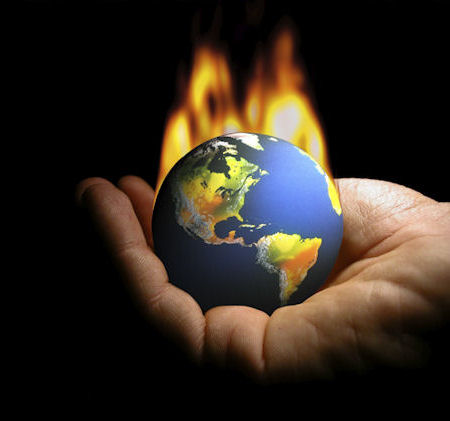
Picture #3: This picture represents a problem that is constantly in the news...humans are causing global climate change. The Inconvenient Truth, by Al Gore, really highlights how we are causing a surge in the amount of greenhouse gases. Ultimately, the earth does need a certain amount of greenhouse gases to sustain life, but we are adding to much greenhouse gas into the atmosphere changing the climate and destroying our world. We are part of the problem, and if we do not change the way we live, the our world’s ability to sustain life could very well be at stake.

No comments:
Post a Comment
Note: Only a member of this blog may post a comment.